C&C Fostering’s 10th Birthday!

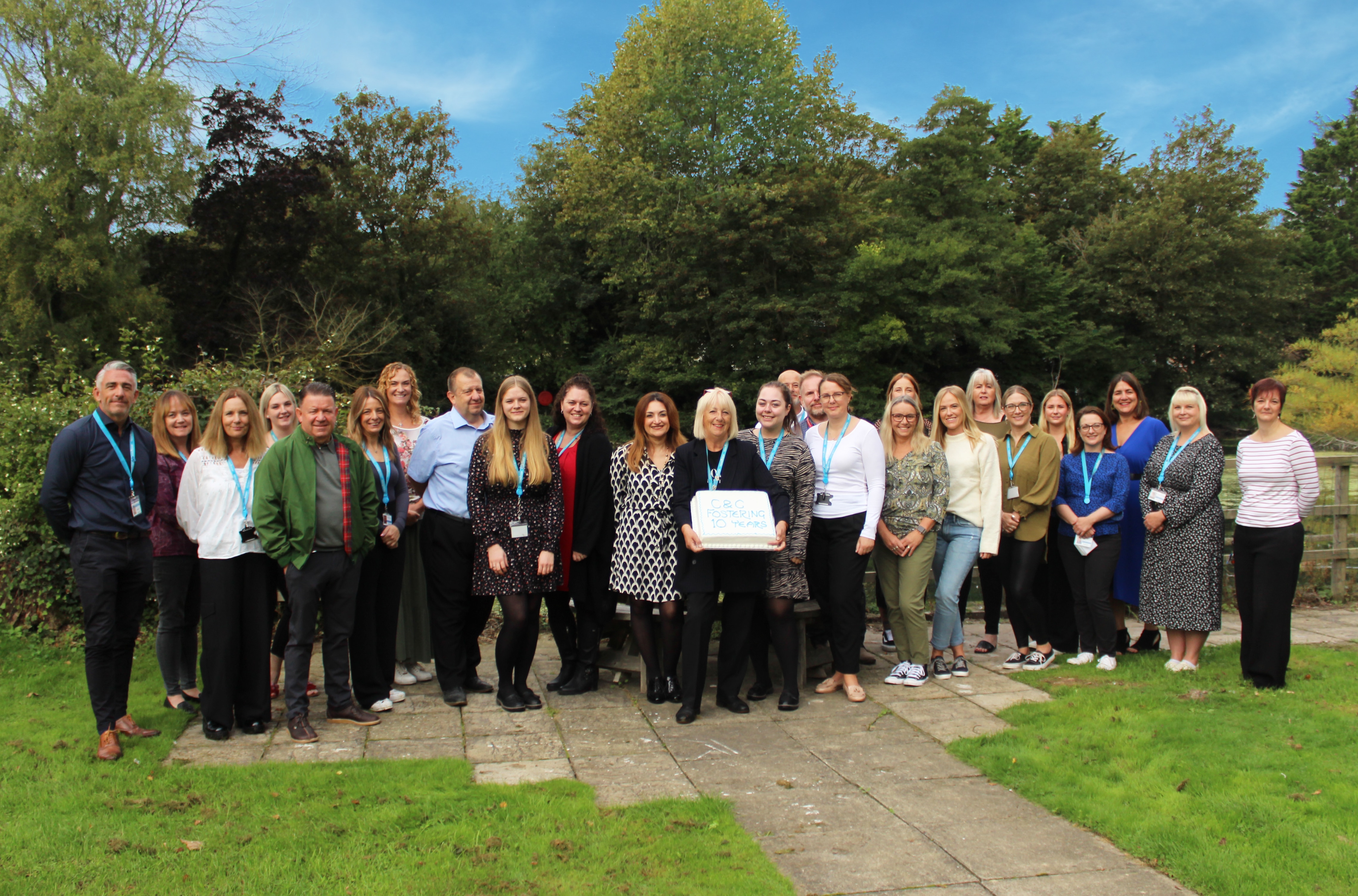
Happy 10th Birthday to Channels & Choices Fostering Department!

This week, Channels & Choices Fostering Department celebrated its 10th Birthday. In 2013 we expanded our services from residential care homes to include an independent therapeutic fostering agency with the purpose of supporting children from our residential houses to get back to family living as quickly as possible , our award winning ‘Stepping Stones” programme was then created. To our knowledge we are the only therapeutic fostering service to offer a completely integrated residential care to fostering step down program which is fully supported by our inhouse school and therapy team.

In that time, we’ve seen over 100 children placed with our amazing carers. The majority of these are long term placements and most children have successfully moved on to independence as they got older, but have forged long-term relationships with their foster carers and the wider C&C community .

We have a number of amazing Foster carers approaching long service milestones of five and ten years with us, which is a testament to Channels & Choices’ emphasis on providing a secure base for both our carers and families.

We’re proud to have seen some amazing progress with some of the young people in our care over these 10 years too: we’ve seen young people create positive outcomes for themselves and move onto college, apprenticeships and independent living and professional careers.

As an agency, we’re constantly evolving and with the help of our wonderful carers, through our ambassador programme, we’re able to now offer an industry leading allowance package alongside an excellent range of benefits including regular community events, celebrations, parties, days out and so much more. We are always looking for new and existing carers to join our multi disciplined team to work with our fantastic children and to help give them a brighter future through long term therapeutic fostering.

We’re incredibly proud of everything we’ve achieved over the last 10 years and we’re excited about what the next ten years has in store. 

If you’d like to become a foster carer and help us celebrate our next birthday, request a simple consultation call by clicking the button below.

The Skills to Foster

As part of the fostering assessment process, prospective foster carers are invited to attend our preapproval training course – ‘Skills to Foster.’

Using the course provided by The Fostering Network and incorporating additional information about Channels and Choices therapeutic approach, the course takes place over three days, usually one day a week for three weeks, although we also run a more condensed course in school holidays.

The course is an introduction to fostering and looks at the skills required to be a successful foster carer. Areas discussed include an introduction into the role of a foster carer, Identity and Life Chances, working as part of a team, Safe Care, Introduction to attachment. The course includes videos, PowerPoint presentations, case studies and activities.

We also outline how Channels and Choices work, looking at our therapeutic model.

People sitting and talking with a group

The course is part of the assessment and feedback is given to the assessing social worker, it is also a real opportunity for applicants to increase their knowledge around the fostering task and to re-assure themselves that fostering is right for them.

The course is not a series of lectures! It is interactive and very much discussion based. Each course takes on its own identity, formed by the participants and trainers. It is an opportunity to ask questions, engage in reflection, consider the impact on applicants who become foster carers and to think about the future evolution of their family and support network.

Channels and Choices will provide a range of team members including Social Workers, Therapists, foster carers and members of the residential team to interact with applicants to provide a full insight into our therapeutic community.

While the course is designed for new applicants, day two contains a strong Channels and Choices theme so we ask transferring carers to join us for that, although they are of course welcome to join the whole course. As well as providing an insight into some of the differences they will experience fostering within our community, existing cares are often able to provide valuable insight to new applicants.

For applicants that are still considering their final decision, Skills to Foster can be a valuable opportunity to add information ahead of committing to fostering. If you think this may be an option for you – we look forward to welcoming you soon.

If you’d like to find out more about becoming a foster carer, click on the button below and request a no-obligation call with our fostering admin team who can tell you more. 

New Pay Structure for Foster Carers

Channels & Choices launches a brand-new increased pay structure for all foster carers.

We can all agree that with the cost of living crisis, the rise in fuel bills, food and basic expenditure, times are a bit tougher than they have been.

We regularly assess our benefits packages for foster carers and after sitting down with our “Fostering Ambassadors” we are delighted to announce that as of the 1st June, we have implemented a 10% pay rise across the board for all foster carers.

This means that a level 1 Therapeutic Foster Carer will receive £495 per child per week.

A Level 2 Advanced Therapeutic Foster Carer will receive £550 per child per week.

A Level 3 Specialist Therapeutic Foster Carer will receive £605 per child per week.

Alongside allowances and other benefits, a carer could receive up to £34,500 per year with just one child in placement.

A Level 3 Specialist Therapeutic Foster Carer with two children in placement will receive £65,720 per year.

Of course, that’s alongside the specialist training, expert support 24/7 and complimentary invitations to all the amazing community events that Channels & Choices regularly hosts, enabling you to meet other carers and help the child you are caring for improve their social skills amongst their peers.

Fostering as a single person

Can you be a foster carer if you’re single?
The short answer is “yes of course!” Your relationship status is not a defining factor of whether you can foster or not. As long as you are over 21 years old and have a spare room, these are the only initial requirements prior to an application. Once you have met these requirements, the application process can be started.

In fact, being a single person can sometimes be an advantage – there could be a situation where the preference is for a child to be placed with a single male or female foster carer.

That being said, fostering on your own can be challenging in an emotional way without having someone to share the load – that’s why here at Channels and Choices we support you every step of the way and you’re never alone.

When you’re a foster carer with Channels and Choices you’ll be assigned a dedicated social worker. Our social workers have smaller caseloads than many other agencies so they’ll get to know you better and you’ll be able to develop an understanding directly with them.

As a single foster carer, being with Channels and Choices can also be the perfect way to increase your network and meet like-minded people! We run regular events which you, your foster child and also your birth children (if applicable) will be invited to attend – this includes Easter Egg hunts, fireworks night, Halloween parties, awards ceremonies and so much more.

You’ll also be part of small support groups called “pods” which is a fantastic chance for you to catch up with other Channels and Choices foster carers who live near you to discuss issues and help each other in your fostering journey.   

Being a single person doesn’t need to be an obstacle in your fostering career. Request a quick consultation call with us today to get the ball rolling!    

Refer a friend fostering scheme

Our refer-a-friend scheme is an effective way to grow our fostering community with caring people like you.

The idea

  • Good, caring people like you socialise with other like-minded people
  • Foster carers talk to and hang out with foster carers from other agencies

Speak to your friend and refer them

Refer your friend online here.


What is Fostering?

What is fostering?

Fostering is caring for a child or children who cannot stay with their own family.
A child will be placed with a foster family whilst their own family overcome problems, during care proceedings, or until an adoptive family is found.  

Foster families are trained and knowledgeable in ensuring that the needs of each individual child are met, and they provide them with a stable, caring environment during their time in foster care.  

Why are children placed in foster care?

Every case is individual, but these are the most common reasons children come into foster care:
baby holding adult's hand

What types of fostering are there?

The reason a child needs fostering generally determines the type of support they’ll need.  All children need a stable, caring environment to stay during their foster placement – mainstream fostering.  Some children may need the additional support which can be provided by a specialist framework of professionals – we call this therapeutic fostering.  So let’s discuss the difference:

Mainstream fostering

Mainstream fostering is the most common form of fostering which gives a child or young person a safe place to stay, perhaps for a night or two whilst their family are helped to resolve any problems they need to overcome, through to a longer-term or even permanent arrangement.

Therapeutic fostering

Some children have experienced difficult circumstances which have had a significant effect on their day to day presentation or behaviour, they will most likely need specific intervention and additional support.   As a therapeutic foster carer, you’ll be part of a team of highly experienced professionals focused on helping you and the child overcome any difficulties. 

free download

What I Wish I Knew Before Fostering

child with parents

How long are foster placements?

The length of a foster placement varies greatly and is generally determined by the reason a child needs fostering.  

Short-term fostering

The aim of a short-term fostering placement is to provide safety and stability to a child, usually at short notice.  This could be either days, weeks or even months.  It could be due to a home or family emergency, a parent’s short-term illness, respite care or for whatever reason their parents or caregivers cannot look after them.  Most children in short-term fostering placements are kept as close as possible to their own family so that they can visit when possible. 

Long-term fostering

Children who may need long-term foster care may have suffered parental loss, neglect, abuse, trauma or domestic violence.  These children need to be placed in a caring and stable environment until they can return to their family, or a suitable adoptive family is found.  Their background many have been difficult, and they may need additional support in day to day life.

Life as a foster carer

Hear it from the Wilsons about getting in touch, the initial process and ongoing support when you need it.

How can I find out more?

Talking to an experienced professional at this point can be invaluable and can help you make your decision to become a foster carer.  An expert fostering agency will have a supervising social worker who can visit you in your home and talk you becoming a foster carer.  They can give you all the information you need, answer any questions you have and help you decide what type of fostering may be right for you. 

Free fostering pack

To get started, download our free fostering information pack

Written by

Sarah Belsham – Senior fostering administrator
01304 827777    www.channelsandchoices.co.uk

channels-and-choices-logo

What I Wish I Knew Before Fostering

Researching fostering and choosing the right agency can be the first MAJOR hurdle. You need to be confident they will provide you with the best training and support.

I hope this helps you become more confident when you talk to fostering agencies as you will know exactly what to ask.

Sarah Belsham – Senior fostering administrator

Fostering checklist

Compare 3 fostering agencies with these 10 best practice check points.

Strictly no spamming 🙂

Fostering Training video – Children who experience trauma and how to work with them

Free foster carer advice and training from one of the country’s leading experts in attachment; Prof David Shemmings OBE on working the children who experience trauma.

1. Start here- Introduction Video


Helping potential and new foster carers are one of our goals here at Channels & Choices Therapeutic foster care so we have created some training and guidance videos explaining what we know about children who experience trauma as well as helpful strategies which can be utilised on a daily basis.

If you are thinking of becoming a foster carer, you already foster or you work with children who display challenging behaviour these videos are for you- we hope that you find them useful. Please watch them in order for maximum benefit.


2. Children who experience trauma – Part 1


3. Children who experience trauma Part 2


4. How to work with children who have experienced trauma Part 1


5. How to work with children who have experienced trauma Part 2

5 Essential questions you should ask before fostering

Be prepared for fostering

There are probably many questions you'll have and here we've put together the top 5 questions that prospective Foster Carers ask when we first meet with them.

We answer these questions to help you on your way in reaching your decision about whether fostering is right for you and provide you with the channels to take the first steps on your fostering journey.

#1 How long will it take for me to be registered and be able to foster children?

As a new fostering applicant there are a number of factors which can affect the process, but the most common issue is the statutory checks that have to be completed including the DBS, medical assessment and references. We will strive to have these completed as quickly as we can and on average it will be 12-16 weeks before you are approved with Channels & Choices. If you are thinking of transferring to us having access to your original assessment paired with our highly skilled assessors can drastically reduce the timescale. 

#2 What’s your Ofsted rating?

Only 30% of Local Authorities are judged as good or above by Ofsted. Channels & Choices is judged as Outstanding overall which puts us in the top 15% of the UK. Every service will have an Ofsted report which should be made available to you and this details the judgements as well as what the service does well and not so well. The gradings are: Inadequate, requires improvement to be good, Good, Outstanding.

free download

What I Wish I Knew Before Fostering

#3 How will I get paid if I don’t have a child in placement?

Foster carers tell us this is one of their biggest worries and we have heard of carers spending their life savings through these periods whilst waiting for children to be placed with them. Channels & Choices is the only fostering service, to our knowledge, that guarantees foster carers work and pay at any time that they may not have a child living with them. Although it is rare for our carers to have availability we do this through offering work within our outstanding children’s homes. Not only does this remove the financial stress for foster carers but it also allows them to learn alongside our skilled residential teams and build relationships with the amazing children we work with. Many of the children will move through to our fostering families as part of our award winning ‘stepping stone’ program.

#4 What support do children receive?

It is sad to hear that an ADHD assessment from via CAMHS (The local Authorities mental health service) currently takes 2 years and that fostering placements are breaking down as a result of children not having school placements.

This isn’t the case at Channels & Choices, we can commission expert services such as an ADHD assessment immediately with our inhouse Psychologist and we can offer instant school (primary & secondary) placements from our in-house school.

As a small fostering company we ensure that each child has a well thought out care plan that is specific to them. We have high aspirations for all children we care for and we encourage them to help shape the service going forward through regular forums and opportunities for them to tell us what is good and what could be better for them. For all children placed with our foster carers we provide unrivalled support from our fostering Social Workers, instant and regular therapy services, access to our school and a great variety of activities and events to help them widen their community and network. All of these factors ensure placement stability and consistency of care which is a great foundation for them being able to reach their full potential.

#5 What support do Foster Carers receive?

We believe that you will not find the level of support that we provide, anywhere else and we strive to have fantastic relationships with all of our Foster Carers. Our highly trained Social Work team all have small caseloads so that they can provide the highest level of support to our foster carers and this formed a strong part of our Outstanding judgment by Ofsted. Our unique POD system ensures that our foster carers have regular forums with our management team, social work team, therapy team, and other foster carers in order to help share experiences and identify strategies for working with children in our care.

We also encourage our foster carers to help shape the future of the fostering service as well as increasing their community and support network through a range of opportunities. The less formal opportunities include regular family activities such as a summer fayre, our famous firework display and the annual panto trip to the Marlowe Theatre to name a few. The more formal opportunities include bespoke training from Professor David Shemmings OBE as well as access to our Advanced Skilled Foster Care Diploma equipping both new and experienced foster carers with new skills and career development.

Written by

Sarah Belsham – Senior fostering administrator
01304 827777    www.channelsandchoices.co.uk

channels-and-choices-logo

What I Wish I Knew Before Fostering

Researching fostering and choosing the right agency can be the first MAJOR hurdle. You need to be confident they will provide you with the best training and support.

I hope this helps you become more confident when you talk to fostering agencies as you will know exactly what to ask.

Sarah Belsham – Senior fostering administrator

Fostering checklist

Compare 3 fostering agencies with these 10 best practice check points.

Strictly no spamming 🙂

8 myths of changing fostering agencies in Kent

Being a foster carer comes with a lot to think about and a lot of paperwork too.  Add to that moving from one provider to the other, and it can all seem daunting. We have our own way of making the process as simple as it can be for our foster carers and have put together some pointers that will help overcome some of your concerns about changing.

1# The Incentives to fostering can seem too good to be true, there must be a catch?

It can often sound a bit like that and that is because as a society, we are so used to misleading advertising. It isn’t unexpected that any incentives offered by fostering providers may also seem too good to be true. Some people think that you can only foster for a Local Authority and are unaware that they have a choice of also choosing an IFA (Independent Fostering Agency)

Most fostering agencies and LAs are all committed to trying to provide the best service for their foster carers and the children in their care, and thus they have to spend a lot of money and time on incentives and ways to retain their foster carers. This may take the form of golden hellos (a fee paid to the foster carers for transferring), higher weekly payments, guaranteed weekly payments, greater access to professional development and training, as well as increased levels of support for families and carers. If you are thinking of applying to be a foster carer or you want to transfer from your current fostering service you should speak to other foster carers from the agencies that you are interested in potentially working with. They should be able to tell you that the incentives that their provider offers really are not too good to be true and tell you the realities of working for that specific agency or local authority.  In fact, when you meet them you should find it difficult to stop them talking about the amazing children they are privileged to look after and the level of specialised support foster carers get to help them do this!

Local Authorities will often try to dismiss IFA’s by claiming that they are all money focused and ‘for profit’ only. The independent review of Foster Care in England (February 2018) concluded that:

“IFAs in our sample spent significantly more than local authorities on carer allowances and fees. IFAs spent more on placement management, which includes training and supervising social workers who have fewer foster carers to manage. IFAs also spent more on recruitment activities. Taking account of these differences, the cost differential between local authorities and IFA costs narrow considerably to the point where, in some instances, there is very little between them.”

2# You might lose a child if your circumstances change

This would be a rare scenario but it is, unfortunately, a frequently used ‘scare tactic’ as used by some local authorities and fostering services when a carer mentions that they may look to transfer somewhere else. The Fostering Network Transfer Protocol which agencies and local authorities adhere to with all transfers is a clear reminder that children should remain in their placement if this continues to meet their needs, and this protocol should form the basis of any discussions with Local Authorities and fostering services about children remaining with their foster carers when their foster carers transfer to another service.

3# You might lose your community network

As Sir Martin Narey mentions in the recent review of foster carer in England document a relationship-based approach is always going to be the most successful for both foster carers and children in their care. Positive relationships with foster carers, other professionals and children should be key to the work done, on a daily basis for any fostering provider. A constant change of social worker or other professionals within the foster carer’s and the child’s network will have a significant impact. All too often these changes can trigger a sequence of events which eventually leads to a breakdown of the fostering placement itself. A good fostering agency should offer a range of opportunities for foster carers and children to widen their community network and shape the future of the fostering service, including getting to know the agency’s committed team, other foster carers and the children. These opportunities should include regular family activities for foster carers and children as well as more formal and informal systems of support such as support group meetings, coffee mornings and childrens forums etc.

4# There will be loss of income during the changeover

This is another of the scare tactics deployed by some local authorities and fostering providers. A good fostering service will make sure that there is a detailed plan in place which has been devised with the foster carers and ensures that the changeover happens as quickly and smoothly as possible without a loss of income during the process. As foster carers in the UK are self-employed (and only approved by one agency/LA at a time) not having a child in placement and the resulting lack of payment is a worry that all carers face. Some of the more creative fostering agencies have realised this and have attempted to help lessen the worry through offering the opportunity to work in the provider’s residential care teams during the assessment process, or at times when children are not in placement. This is not possible with every agency or local authority however, but it can be a great opportunity for new and existing foster carers to work with looked after children as well as removing the stress of not being paid when a child is not in placement.

5# Children might not come from your area.

The careful matching of children to foster carers should be the core consideration of any fostering service and local authority. The needs of each child should be carefully considered, as well as the skills of the foster carers and the circumstances of their individual families, before proceeding with a match. Good independent fostering agencies (IFAs) will specialise in certain aspects of their service such as therapeutic care, parent and child placements, children with disabilities etc and children will usually be referred to them for this reason. It can be compared to sourcing the best possible healthcare- If we had a heart problem we would seek out the best heart consultant in the land even if they were a considerable distance away- why should it be different for children who require the best care.

6# Having to go through the process again is a chore

Transferring to a new fostering service can bring with it the chore of starting afresh with the process.  A good fostering agency will understand that this requirement often feels like a hurdle and will work with foster carers to plan how the process can be made as simple as possible. Being able to access your original assessment and having a skilled professional completing the assessment can usually drastically shorten the timescales of assessment and can be as quick as 6 weeks. A good fostering service should be able to evidence this and allow those who are interested in transferring to be able to talk this through with their carers who have been through the process.

7# Independents only get difficult children

Only 30% of Local Authorities are judged as good or above whereas 91% of IFAs are judged good or outstanding by Ofsted. IFAs can work with more challenging children and are often better equipped to do this than local authorities, for example, many Local Authorities have ceased with non-statutory services such as their TRP Therapeutic Reparenting Program which means that children and families will only receive minimal support from an overstretched CAMHS service. This has resulted in a number of issues for foster carers such as lack of appropriate support and professional development as well as a lack of essential support for the child. This can often be seen through a huge deficit in vital resources including ASD, ADHD assessment, medication, individual and family therapy. A good fostering service will provide this as standard and generally as they have a far smaller number of children in placement than the local authority, they are able to provide a more bespoke and focused structure of care for each child and support for the foster carers.

Sir Martin Narey’s recent independent review of Foster Care in England (February 2018) highlighted:

“foster carers are more satisfied with supervising social worker support from independent fostering agencies. And our own analysis of costs suggests that supervising social workers from IFAs have smaller caseloads and that IFAs invest more money in supporting and training carers. So, we do not believe there is any question about the quality of care provided by independent agencies.”

The Fostering Network estimates that at any one time there are approximately 6000 foster placements required.  A good fostering agency will work very closely with foster carers to consider their skills, experience, knowledge and family circumstances before matching them to a child. They will allow prospective foster carers who are considering a transfer to talk with their foster carers and if appropriate some of the children in their care. They should be able to evidence good placement stability for children, content foster carers as well as evidence that the children in their care are happy, safe and feel supported.

8# The concern about vacancies & placements

A good fostering provider will only have a small number of foster carers with vacancies at any one time. Most will have a very high number of child referrals each month, against a maximum of maybe one or two foster carers who are in a position to offer a placement. This can be due to the agency offering more longer-term placements and the overall stability of children in placement (meaning vacancies do not arise very often).

Prior to transferring to an IFA, many local authority foster carers have expressed their dismay at having a lack of children in placement, feeling lost in the huge LA fostering service or not being able to effect any real change due to bureaucracy and time it takes to get a decision from a social worker or team manager.

A small number of providers may have additional bespoke options such as step down programs (when a child moves from a residential to fostering placement). These programs can give foster carers even greater choice when analysing and assessing referrals as a potential match. This is one example, but there may be similar programmes in different agencies.

If these points have set your mind to rest a bit, why not request a simple, no-obligation chat about fostering with us? 

We have won an award!

In November, we were delighted to hear that our innovative Stepping Stones Programme won the 2017 Supplier Recognition Award from Essex County Council.

The winner for the Best Small to Medium Enterprise (SME) is Channels & Choices for their ‘Stepping Stone’ fostering program that deals with very complex fostering referrals.

Our Directors would like to thank the Fostering Team for all their hard work and dedication. They are thrilled with the award and cannot wait to see what the future holds.